
Basic Theory for Finite Element Analysis (FEA) and Implementation in the Framework of ASME Sec VIII D2 Part 5
Cohort starts 11 Oct 3 enrolled
Finite Element Analysis (FEA) Fundamentals and ASME Section VIII Division 2 Part 5 Implementation for Pressure Vessel Design

- 7-day money-back guarantee
- Session recordings included
- Certificate of completion
Why enroll
Is this course for you?
You should take this if
- You work in Oil & Gas or Energy & Utilities
- You're a Mechanical / Piping & Layout professional
- You have 3+ years of hands-on experience in this field
- You prefer live, instructor-led training with Q&A
You should skip if
- You're new to this field with no prior experience
- You need a different specialisation outside Mechanical
- You need fully self-paced, on-demand content
Course details
Course suitable for
Key topics covered
Opportunities that await you!
Career opportunities
Training details
This is a live course that has a scheduled start date.
Live session
Starts
Sat, Oct 11, 2025
Duration
2.8 hours per day
Our Alumni Work At
Why people choose EveryEng
Industry-aligned courses, expert training, hands-on learning, recognized certifications, and job opportunities-all in a flexible and supportive environment.
What learners say about this course

Excellent Mentor. Very well explained.

Execellent Course for beginners

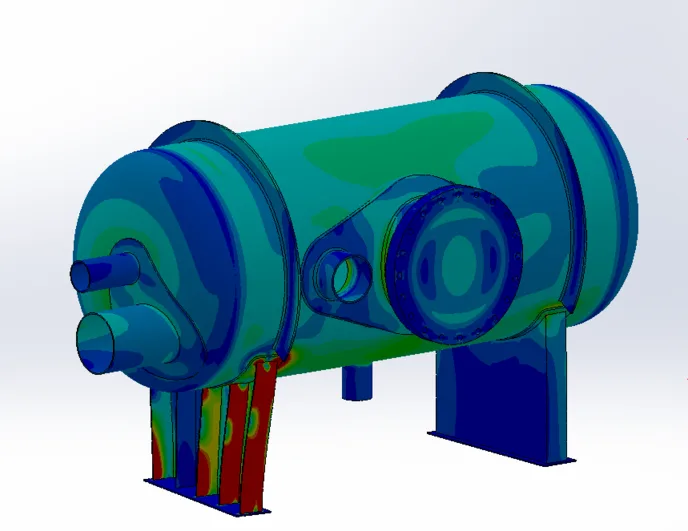
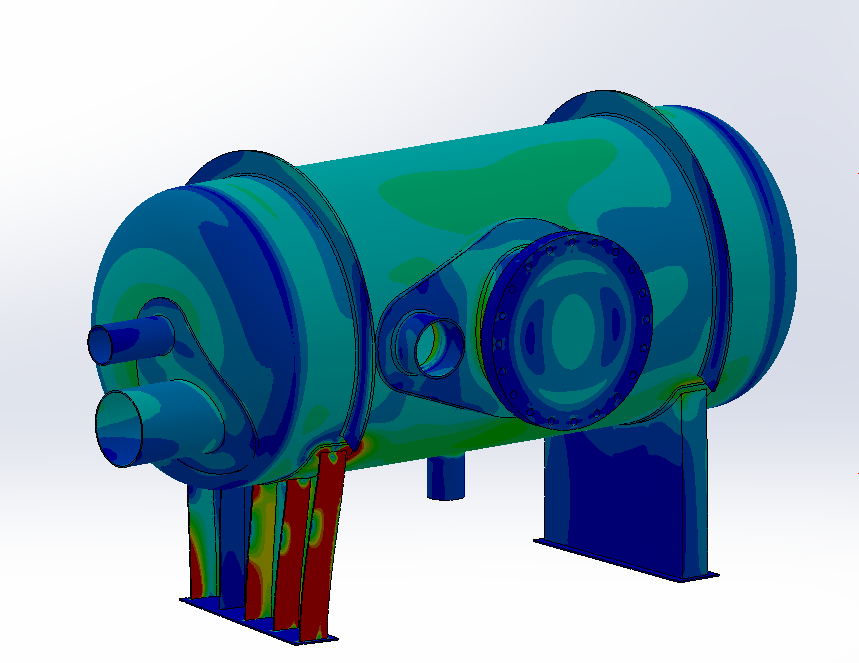
Initially, I wasn’t sure what to expect from this course. Coming from oil & gas projects where FEA is often treated as a black box to satisfy ASME Section VIII, the focus on Division 2 Part 5 methodology was a useful reset. The material did a good job tying elastic-plastic analysis back to real pressure vessel cases seen in refineries and energy utilities, especially around nozzles, local stresses, and thermal gradients from startup/shutdown cycles. One challenge was keeping the boundary conditions realistic. Translating piping loads and saddle supports into an FEA model without over-constraining it took some iteration, and the course didn’t shy away from showing how small assumptions can drive non-conservative results. That mirrors industry practice more than most training does. The discussion on stress linearization versus equivalent stress checks highlighted edge cases where hand calculations or Div 1 rules can be misleading. A practical takeaway was a clearer workflow for Part 5 assessments—when elastic analysis is enough, when plastic collapse needs to be checked, and how to document it so reviewers don’t push back. Compared to typical vendor reports, this approach is more defensible at a system level. I can see this being useful in long-term project work.

Coming into this course, I had some prior exposure to the subject, mainly running basic linear FEA for pressure vessels in oil & gas projects. This training pushed things further, especially around applying ASME Section VIII Division 2 Part 5 in a disciplined way. The walkthrough of stress linearization, plastic collapse checks, and ratcheting assessment was directly relevant to vessels used in refinery and gas processing units, where code compliance is always under scrutiny. One real challenge was wrapping my head around setting correct boundary conditions and load combinations for elastic‑plastic analysis. In past work, that’s where models quietly went wrong. The course didn’t sugarcoat that and showed how small assumptions can drive non‑conservative results, which was useful. Meshing strategies for nozzles and local discontinuities also filled a gap, particularly for pressure vessels tied into energy utility systems like boilers and heat recovery units. A practical takeaway was a clearer workflow for documenting Part 5 checks so they actually stand up during design review. That alone will save time on the next project. The content felt aligned with practical engineering demands.