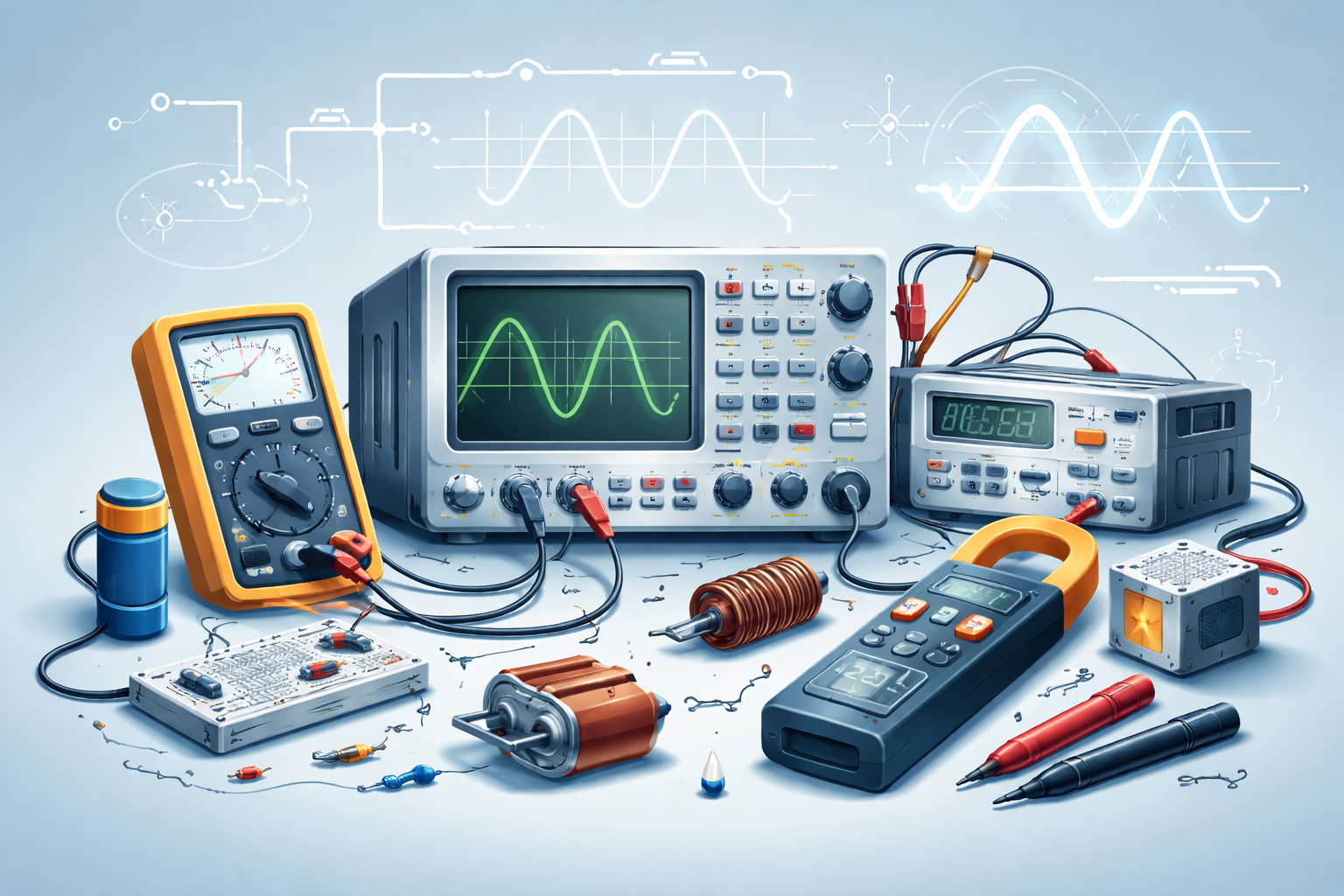
Participants join this course to build a strong and clear understanding of electrical and AC circuit fundamentals in simple, easy language. It helps them solve numerical problems confidently and understand core concepts like AC circuits, network theorems, and power. The course is highly useful for competitive exams, technical interviews, and practical electrical work.
You want to build skills in Engineering & Design, Project Management
You prefer self-paced learning you can revisit
You should skip if
You need a different specialisation outside Electrical
You need live interaction with an instructor
Course details
This course is designed to build a strong foundation in electrical and AC circuit fundamentals for students and job-oriented exam aspirants. It starts with basic electrical concepts such as voltage, current, EMF, and electrical networks, helping learners understand how circuits work from the ground up. The course explains AC fundamentals including RMS value, average value, form factor, frequency, and phase in a simple manner. Learners will understand active, reactive, and apparent power and their importance in real electrical systems. Detailed coverage of AC circuits with resistor, inductor, and capacitor explains why current leads or lags voltage. The course includes RL, RC, and RLC circuits, along with resonance concepts. Kirchhoff’s laws (KCL & KVL) and problem-solving techniques are explained step by step. Important network theorems such as Superposition, Thevenin’s, Norton’s, and Maximum Power Transfer are covered with clear conditions and applications. Concepts of ideal and practical voltage and current sources are also included. The course focuses on numerical problems, MCQs, and exam-oriented questions, making it highly useful for competitive exams and practical understanding. Source: Vizag Tech Hub (Youtube)
Industry-aligned courses, expert training, hands-on learning, recognized certifications, and job opportunities-all in a flexible and supportive environment.