Skip to main contentEngineering Courses, Mentoring & Jobs | EveryEng
Corrosion Mechanism and Evaluation in Oil and Gas Industry banner

Corrosion Mechanism and Evaluation in Oil and Gas Industry

2 enrolled
Corrosion Mechanism and Evaluation in Oil and Gas Industry banner

Live online Advanced

Corrosion Mechanism and Evaluation in Oil and Gas Industry

4(10)
2 enrolled
1491 views
FREE
12 hrs
Next month
English
Mohammad Al Jawhar
Mohammad Al JawharAsset Integrity/ Sr Petroleum Engineer
  • Session recordings included
  • Certificate of completion
  • Anytime Learning
  • Learn from Industry Expert
Volume pricing for groups of 5+

Why enroll

·       Mastering corrosion mechanisms and control measures can open up new opportunities for roles in asset integrity management, facility maintenance, or corrosion engineering.

·       Corrosion is one of the leading causes of costly repairs, downtime, and equipment replacement in the oil and gas industry. Professionals trained in corrosion control can help companies save money by implementing preventative maintenance strategies.

·       Corrosion can lead to catastrophic failures, leaks, and environmental spills. Learning about corrosion prevention enhances operational safety and reduces the risks of accidents.

·       The course will equip participants with essential skills to recognize, evaluate, and control corrosion using a combination of theoretical knowledge and practical tools, making them highly effective in their roles.

·       Knowledge of industry standards and regulations will help participants ensure that their projects and facilities comply with global safety and environmental requirements.

·       Effective corrosion control extends the lifespan of equipment, reducing the environmental impact and carbon footprint associated with frequent replacements or failures.

Summary

The Corrosion Mechanisms and Evaluation in Oil and Gas Industry course provides a comprehensive understanding of corrosion processes, evaluation techniques, and mitigation strategies essential to ensuring the longevity and safety of oil and gas infrastructure. Participants will gain valuable skills in identifying corrosion risks, applying corrosion control methods, and ensuring compliance with industry standards, thus contributing to operational safety, cost-efficiency, and sustainability in the oil and gas sector.

This course is ideal for engineers, technicians, maintenance personnel, and asset integrity managers seeking to expand their expertise in corrosion control and management. By completing this course, participants will be able to make informed decisions regarding materials selection, monitoring techniques, and preventive measures to effectively combat corrosion in oil and gas operations.

Is this course for you?

You should take this if

  • You work in Oil & Gas
  • You're a Geoscience / Petroleum professional
  • You have 3+ years of hands-on experience in this field
  • You prefer live, instructor-led training with Q&A

You should skip if

  • You're new to this field with no prior experience
  • You need a different specialisation outside Geoscience
  • You need fully self-paced, on-demand content

Course details

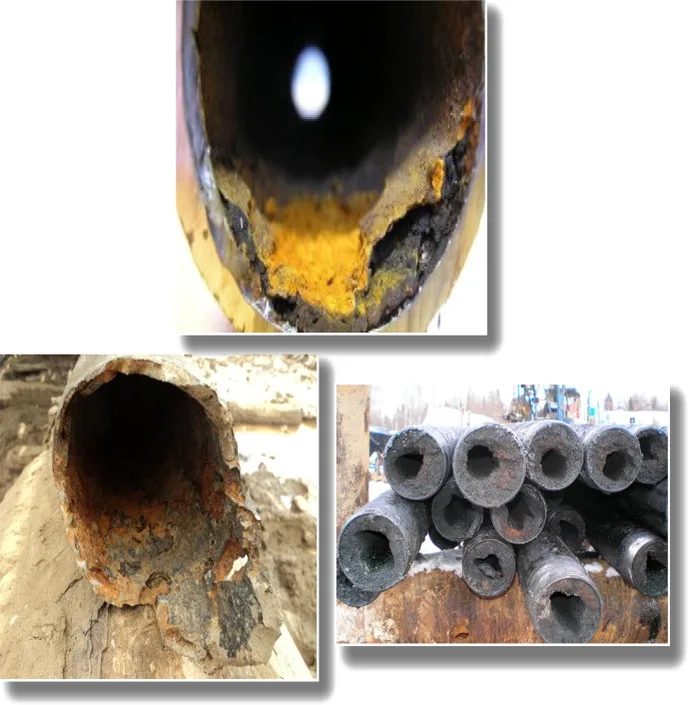
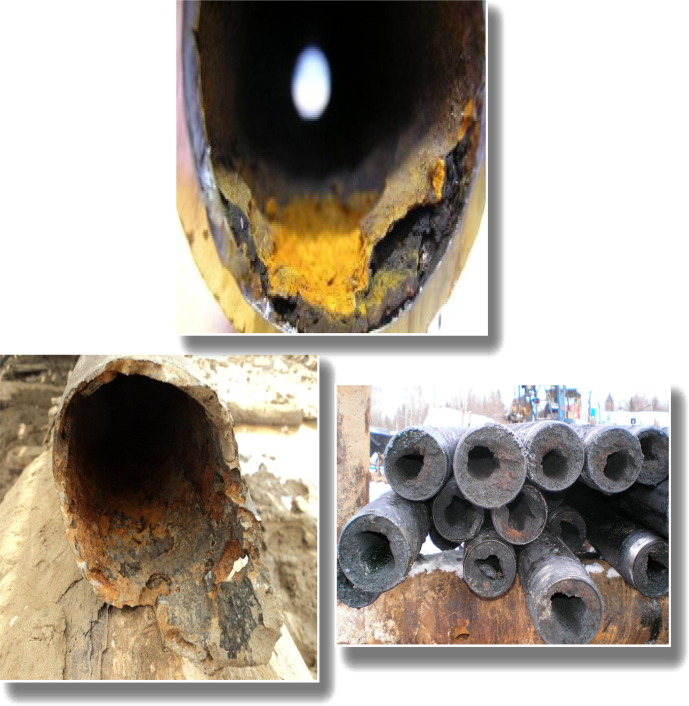
Corrosion is a significant issue in the oil and gas industry, leading to equipment failure, environmental hazards, and high maintenance costs. The Corrosion Mechanisms and Evaluation in the Oil and Gas Industry course is designed to equip engineers, maintenance personnel, and industry professionals with a thorough understanding of corrosion processes, preventive measures, and evaluation techniques. This course focuses on identifying various corrosion types, understanding their underlying mechanisms, and implementing strategies to mitigate their impact on oilfield equipment, pipelines, and production facilities.

Participants will learn about the root causes of corrosion in harsh environments such as deepwater drilling, high-pressure systems, and sour gas environments (H2S), as well as techniques to evaluate, monitor, and control corrosion using industry-standard methods.

The key objectives of the course are to:

  1. Understand Corrosion Mechanisms: Explain the fundamental chemical and electrochemical processes that lead to corrosion in oil and gas operations.

  2. Identify Corrosion Types: Teach participants to recognize and differentiate between various forms of corrosion (e.g., uniform, localized, galvanic, pitting, and stress corrosion cracking).

  3. Evaluate Corrosion Risks: Enable participants to assess corrosion risks based on environmental and operational conditions such as temperature, pressure, water chemistry, and CO2/H2S content.

  4. Implement Corrosion Prevention and Control: Provide strategies for corrosion control, including the use of coatings, inhibitors, cathodic protection, and material selection.

  5. Corrosion Monitoring and Inspection: Learn to monitor and evaluate corrosion in pipelines and facilities using techniques like ultrasonic testing, corrosion coupons, and probes.

  6. Understand Standards and Regulations: Familiarize participants with relevant standards (e.g., NACE, ISO) and safety regulations for managing corrosion in oil and gas operations.

  7. Cost-Effectiveness and Safety: Focus on cost-effective corrosion control techniques that ensure safety, minimize environmental impact, and reduce the need for repairs or replacements.

Course suitable for

Key topics covered

  1. Introduction to Corrosion in Oil and Gas

    • Basic principles of corrosion: electrochemical reactions, oxidation, and reduction

    • Overview of the oil and gas industry's corrosion challenges

    • Environmental factors affecting corrosion (e.g., high temperature, CO2, H2S)

  2. Corrosion Mechanisms and Types

    • Uniform and localized corrosion (e.g., pitting and crevice corrosion)

    • Galvanic corrosion

    • Erosion-corrosion and cavitation

    • Stress Corrosion Cracking (SCC)

    • Corrosion under insulation (CUI)

    • Hydrogen embrittlement

  3. Corrosion in Specific Environments

    • Corrosion in sour gas environments (H2S)

    • Corrosion in high-pressure, high-temperature (HPHT) systems

    • Corrosion in offshore and deepwater operations

    • Microbiologically influenced corrosion (MIC)

  4. Materials Selection and Corrosion Resistance

    • Metal alloys used in oil and gas and their corrosion resistance properties (e.g., carbon steel, stainless steel, duplex)

    • Material selection for specific environments and operational conditions

    • Protective coatings and linings

  5. Corrosion Monitoring and Inspection Techniques

    • Non-destructive testing (NDT) methods for corrosion detection (e.g., ultrasonic testing, radiography)

    • Use of corrosion probes, coupons, and sensors

    • Risk-based inspection (RBI) for pipeline and equipment monitoring

  6. Corrosion Prevention and Control Methods

    • Cathodic protection: sacrificial anode and impressed current methods

    • Use of corrosion inhibitors in production systems

    • Application of protective coatings and linings

    • Chemical treatment programs for controlling corrosion in pipelines and wells

    • Corrosion inhibitors and nanotechnology, microbial monitoring and control

    • Autonomous Underwater Vehicles (AUVs)

    • Corrosion agents in drilling and producing operations

    • Innovative technologies for corrosion detection and prevention in oil wells

  7. Corrosion Management and Mitigation Strategies

    • Developing and implementing a corrosion management plan (CMP)

    • Integrating corrosion control into asset integrity management programs

    • Best practices for corrosion documentation and data management

  8. Industry Standards and Regulatory Framework

    • NACE (National Association of Corrosion Engineers) standards

    • ISO corrosion-related standards

    • Environmental and safety regulations for corrosion control in oil and gas

  9. Economic and Environmental Impact of Corrosion

    • Cost-benefit analysis of corrosion control programs

    • Reducing the environmental impact through corrosion prevention

    • Case studies of catastrophic failures due to corrosion and their consequences

Opportunities that await you!

Career opportunities

Training details

This is a live course that has a scheduled start date.

Our Alumni Work At

Why people choose EveryEng

Industry-aligned courses, expert training, hands-on learning, recognized certifications, and job opportunities-all in a flexible and supportive environment.

What learners say about this course

sarath Selvaraj
sarath Selvaraj Piping Engineer
Feb 25, 2026

Coming into this course, I had some prior exposure to the subject from pipeline integrity work and offshore tiebacks. The material went deeper than expected on CO₂ corrosion and H₂S sour service, especially how water chemistry and partial pressure swing the dominant mechanism. The discussion on pitting versus general wall loss lined up well with what’s typically seen in carbon steel flowlines, but it was useful to see the electrochemical side spelled out rather than just relying on rules of thumb. One challenge was keeping all the mitigation options straight at a system level. In the field, cathodic protection, coatings, and chemical inhibition are often treated independently, while the course tried to show how they interact. That took a bit of mental rewiring, particularly for mixed-metal systems where galvanic corrosion shows up as an edge case during brownfield modifications. The sections on corrosion monitoring were practical. Comparing corrosion coupons with ultrasonic testing helped clarify when each makes sense, and why relying on a single data source can be misleading. A concrete takeaway is being more deliberate about aligning inspection intervals with actual corrosion rates instead of fixed schedules. That’s closer to best practice than what still happens on many assets. I can see this being useful in long-term project work.

Faisal Altaf
Faisal Altaf Engineering Manager
Feb 25, 2026

Coming into this course, I had some prior exposure to the subject from pipeline integrity and production operations, so the bar was fairly high. The sections on CO₂ corrosion and H₂S sour service stood out, especially how localized pitting and stress corrosion cracking can behave very differently than the textbook uniform loss we often assume in early design. That aligned well with what’s seen in aging flowlines versus new builds. One challenge was keeping track of how many variables interact at once—water chemistry, temperature, and flow regime—when evaluating corrosion risk. In the field, those inputs are rarely clean or stable, and the course didn’t shy away from that reality. The discussion on cathodic protection limitations in complex facilities, compared to how CP is sometimes over-trusted in industry, was useful and a bit overdue. A practical takeaway was tying inspection data like UT readings and corrosion coupons back into material selection and inhibitor strategy, instead of treating monitoring as a box-checking exercise. The edge cases around mixed metallurgy and galvanic effects were particularly relevant at the system level, where small decisions ripple into long-term reliability and safety. Overall, it felt grounded in real engineering practice.

sarath Selvaraj
sarath Selvaraj Piping Engineer
Feb 25, 2026

Coming into this course, I had some prior exposure to the subject through day‑to‑day production support, but a lot of it was fragmented. The modules on nodal analysis and artificial lift selection helped connect the dots, especially when comparing ESP performance versus gas lift under changing water cut. Flow assurance topics like pressure losses and liquid loading were also more relevant than expected, since those issues show up quietly in mature wells. One challenge was keeping up with the data-driven optimization sections. Working through production data and interpreting trends took more time than planned, and it exposed a gap in how I normally rely on surface rates without digging deeper into inflow performance. Still, pushing through that was worth it. A practical takeaway was learning a structured workflow to diagnose underperforming wells before jumping to workovers. That approach was applied almost immediately on a current field project to justify a choke change instead of an expensive lift modification. The course felt grounded in real operating constraints rather than theory-only discussions. I can see this being useful in long-term project work.

ETHIGASH V
ETHIGASH V Production Trainee
Feb 25, 2026

Initially, I wasn’t sure what to expect from this course, given the mix of intermediate and advanced topics. Coming from day‑to‑day production support, the biggest gap was tying nodal analysis to actual field decisions instead of just theory. The sections on inflow performance relationships and tubing outflow were especially useful, and the discussion around artificial lift selection (ESP vs. gas lift) reflected problems seen on mature oil wells. One challenge was keeping up with the data-driven parts, particularly when reconciling well test data with real-time production data that doesn’t always line up cleanly. That’s a common headache in oil and gas operations, so it felt realistic rather than academic. Flow assurance topics like liquid loading and pressure losses in multiphase flow also connected well with issues encountered during rate optimization projects. A practical takeaway was a clear workflow for running nodal analysis to justify changes in choke size or pump operating points, instead of relying on trial and error. Parts of this were applied directly to a current field with rising water cut and declining rates. Overall, it felt grounded in real engineering practice.

FREE

Coming in Next Month

Questions and Answers

Empty state icon

No questions yet - Be the first one to ask!