
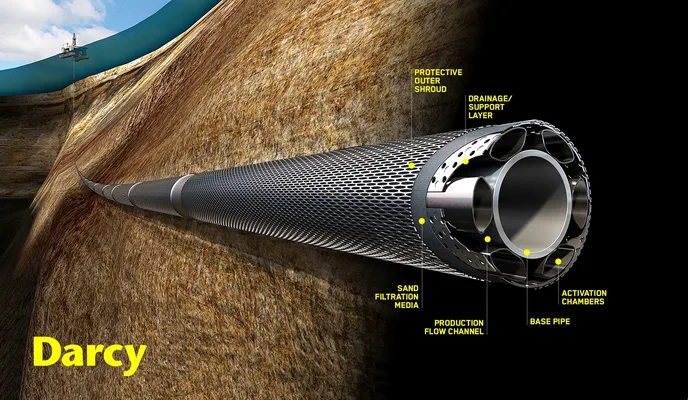
Sand Management Systems - Oil and Gas Well Completions
1 enrolled
Sand Management Systems - Oil and Gas Well Completions
- 7-day money-back guarantee
- Session recordings included
- Certificate of completion
Why enroll
Is this course for you?
You should take this if
- You work in Oil & Gas or Energy & Utilities
- You're a Geoscience / Mechanical professional
- You prefer live, instructor-led training with Q&A
You should skip if
- You need a different specialisation outside Geoscience
- You need fully self-paced, on-demand content
Course details
Course suitable for
Key topics covered
Opportunities that await you!
Career opportunities
Training details
This is a live course that has a scheduled start date.
Our Alumni Work At
Why people choose EveryEng
Industry-aligned courses, expert training, hands-on learning, recognized certifications, and job opportunities-all in a flexible and supportive environment.
What learners say about this course

yes

This course turned out to be more technical than I anticipated. Coming from a drilling operations role, the sections on wellbore trajectory planning and dogleg severity finally connected a few dots that were missing on recent oil and gas projects. The walkthroughs on BHA selection and how mud motors influence build rates felt grounded in how things actually behave on the rig, not just theory. MWD/LWD basics were also useful, especially understanding survey spacing and how it impacts anti-collision risk in crowded fields. One challenge was keeping up with the math behind directional surveys and toolface orientation. That part took a couple of replays and some note-taking, but it was worth pushing through. A practical takeaway was being able to sanity-check a proposed directional plan and flag unrealistic build/turn expectations before it hits execution. That’s already helped during a well review with the drilling contractor. The course filled a clear knowledge gap between vertical drilling experience and deviated well planning, which is becoming standard across energy utilities and upstream work. It definitely strengthened my technical clarity.

At first glance, the topics looked familiar, but the depth surprised me. The sections on wellbore trajectory planning and dogleg severity went beyond the usual surface-level treatment and tied directly into how torque and drag show up during execution. Coverage of MWD/LWD fundamentals was solid, especially where it contrasted slide vs. rotary steerable behavior, which aligns with current oil & gas field practice rather than textbook assumptions. One challenge was the pacing around survey calculations and coordinate systems. Without recent hands-on exposure, the math-to-operations connection took effort to follow, particularly when thinking about edge cases like high-angle build sections near casing shoes. Still, those scenarios are realistic and forced some rethinking of how small planning choices ripple through drilling performance and NPT risk. A practical takeaway was the emphasis on planning for uncertainty—toolface tolerance, formation variability, and anti-collision margins—rather than assuming ideal conditions. That mindset mirrors what’s needed when coordinating with geosteering, mud programs, and energy utilities on shared pads. Compared to typical onboarding material, this course leaned more toward system-level implications than rote procedures. I can see this being useful in long-term project work.

Coming into this course, I had some prior exposure to the subject from working around drilling and production teams, but well completions always felt like a black box. This course helped connect the dots between cementing quality, perforating strategies, and how they actually affect production later on. The sections on tubing and packer selection were especially useful, since those decisions come up regularly on brownfield work and I hadn’t fully understood the trade-offs before. One challenge was keeping up with all the terminology early on, especially around sand control methods and basic completion hardware. It took a bit of revisiting the diagrams and notes to make everything click. Still, the beginner-level pacing made it manageable without feeling watered down. A practical takeaway was learning how completion design ties directly into well integrity and future interventions. That’s already changed how I review completion summaries on current projects, particularly when looking at perforation intervals and cement tops. The course filled a real knowledge gap between drilling and production work, and it definitely strengthened my technical clarity.
